Winnapaug Country Club sits on 120 acres between the airport and Winnapaug Pond, a public 18-hole course laid out in the 1920s by Donald Ross with views that stretch to Block Island Sound. No membership fee required. Just tee times and a scorecard, the way it's been for a century.
It's also the site of the most consequential real estate fight in Westerly in years, and the outcome tells you more about what you'll actually be able to buy here than any listing search will.
The plan that would have solved the town's housing math
In 2023, the course's owner, Winn Properties, filed an application to level the fairways and replace them with 90 buildings holding 2,300 residential units. Roughly 690 of those units, about 30 percent, would have been deed-restricted affordable housing.
The number mattered because Westerly's own affordable housing stock sat at around 6.45 percent of its year-round units as of 2024, well below the state's 10 percent target under Rhode Island's Low and Moderate Income Housing Act. A planner who testified in favor of the project told the Planning Board it would have pushed Westerly's affordable stock to roughly 9 percent in one filing, closing most of the gap the town had been struggling with for years.
The Planning Board said no anyway. Its written denial called the project "a huge departure" from the town's comprehensive plan. Board member Christopher Lawlor put it more bluntly, saying the project was simply "too big a project for this part of town." The board's concerns centered on the loss of 120 acres of open space and the risk to Winnapaug Pond, an environmentally sensitive salt pond the golf course borders.
Winn Properties appealed to Washington County Superior Court. In September 2025, Associate Justice Jeffrey Lanphear upheld the board, writing that its decision was "supported by competent evidence." The developer has since appealed to the Rhode Island Supreme Court, according to Westerly Town Manager Shawn Lacey. As of this writing, that appeal is still pending, so nothing about the golf course's future is settled either way.
What is settled is the pattern. This was the third time in roughly three years that Westerly turned down a major redevelopment of that property. The Town Council killed a golf-resort version of the plan in 2022. It voted down a zoning overlay meant to preserve the course while adding 700 units in 2024. Then the Planning Board rejected the 2,300-unit version outright.
What Westerly approved instead
While the golf course case worked its way through the courts, the town kept approving housing. Just not this kind, and not there.
| Project | Location | Units | Status |
|---|---|---|---|
| Winnapaug redevelopment | Shore Road golf course | 2,300 | Rejected by Planning Board, upheld by Superior Court, now on appeal to RI Supreme Court |
| Southpoint Commons | Wells and Franklin Streets | 72 | Approved, tax credits finalized May 2026, construction underway |
| Sandpiper Landing | Chamber Way and Post Road | Not disclosed publicly | Construction began within the last month, per the Planning Board's 2025-26 annual report |
| Hickory Knoll | Robin Hollow Lane | 22 | In permitting and environmental testing, $750,000 in state funds awarded |
| 170 Main Street annex | Downtown Main Street | Housing above ground-floor commercial | Under renovation by the Ocean Community Chamber of Commerce |
Southpoint Commons is the clearest comparison to Winnapaug. It's a 72-unit development on Wells Street built by Dakota Partners with Connolly and Partners, and it received $6,023,385 in state Low-Income Housing Tax Credits, the second-largest award among six projects funded statewide that round. The project first got its comprehensive permit approval back in 2023. It only received firm approval of that tax credit reservation in May 2026. Three years to finalize financing on a project the town actually wanted, versus a swift, repeated no on a project thirty times its size.
Hickory Knoll is smaller still. It's South County Habitat for Humanity's largest project to date, 22 homes off Robin Hollow Lane, funded in part by $750,000 in state infrastructure money. These are income-qualified ownership homes built one at a time by a nonprofit, not a developer selling into the open market.
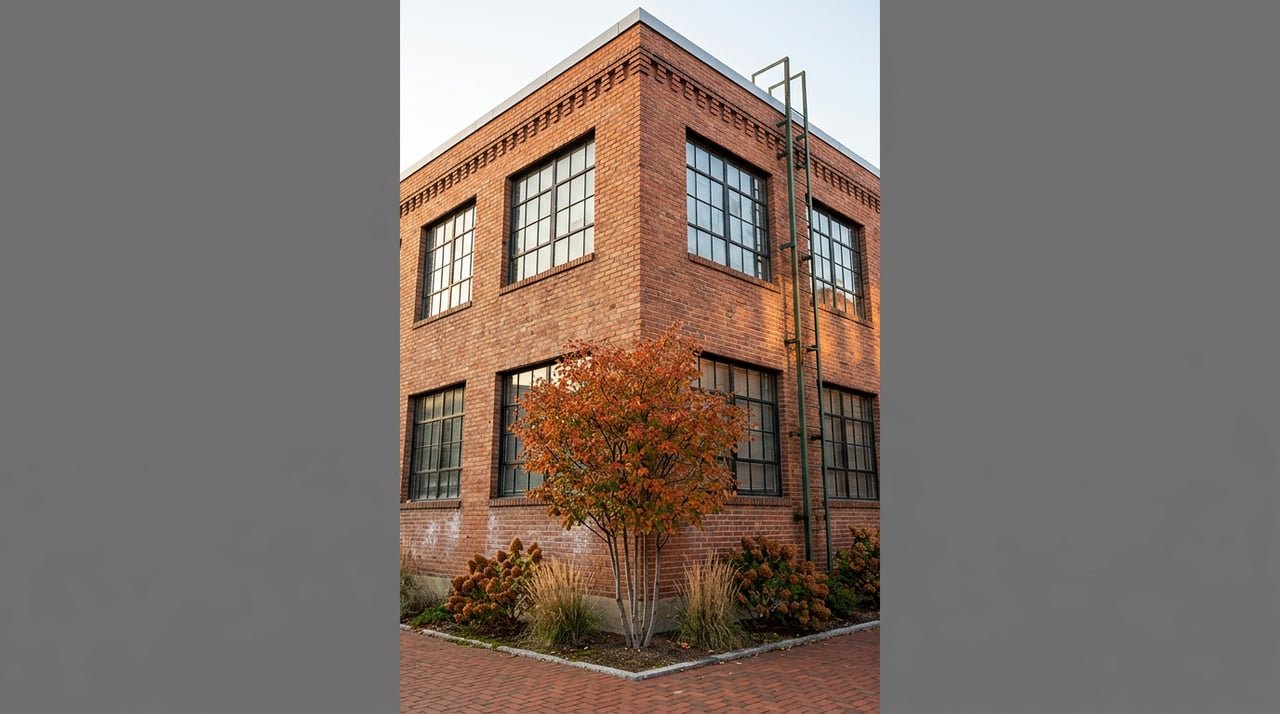
And then there's 170 Main Street, which might be the most telling example of all. It's a two-story, 3,700-square-foot warehouse, previously without water or electricity, between Hallock's Appliances and Brumble Bikes, directly across from Cinder restaurant. The Ocean Community Chamber of Commerce bought it in May 2025 for use as an annex, raised $350,000 to close the deal, and is now spending roughly $800,000 to renovate it, including adding housing on the upper level. Chamber board member Ruedi Hauser III of 13th Hour Distilling helped lead the fundraising, alongside Jennifer Brinton of Grey Sail Brewing. A nonprofit business association renovating one building to squeeze a few housing units above its own office space is a long way from a 2,300-unit master plan. It's also exactly the kind of project Westerly keeps saying yes to.
The mechanism, not just the news
Every approved project sits on an already-developed lot along an arterial road, Wells Street, Post Road, Chamber Way, Main Street. None of them touch open land. None of them sit next to an environmentally sensitive pond. And every one of them is either income-restricted rental housing or, in Habitat's case, income-qualified ownership housing built by a nonprofit.
That last point is the one buyers researching Westerly tend to miss. If you're shopping the open market, comparing Westerly's inventory against Mystic or Charlestown, you might read headlines about hundreds of new housing units in the pipeline and assume relief is coming. It isn't, not for you. None of the units in Southpoint Commons, Sandpiper Landing, or the Main Street annex will show up as a resale listing competing for your offer. They're built to a different program, priced to a different formula, and occupied through a different application process entirely.
The only project that would have added meaningful open-market supply at scale, the 2,300-unit Winnapaug plan, is the one the town rejected, twice at the local level and once so far in court.
What this means if you're house hunting here
- Don't wait on the town's housing pipeline to loosen competition for a typical resale home. The projects moving forward are structurally separate from the market you're shopping in.
- Watch infill parcels along already-built corridors, not open land, for where new construction is likely to get approved. Wells Street, Post Road, and Main Street are where the town says yes.
- If you're an investor interested in income-restricted or multi-family development, Rhode Island's Low-Income Housing Tax Credit program is actively funding projects in Westerly. RIHousing publishes award details publicly, and they're worth tracking if that's your lane.
- Keep an eye on the Route One Corridor zoning overlay. The Planning Board referred proposed comprehensive plan amendments, including this overlay, to the Town Council, and it's the one policy change that could actually shift what gets approved going forward. It hasn't been adopted yet, so nothing has changed as of today.
Questions we keep getting about this
Could the Rhode Island Supreme Court still let the Winnapaug project move forward? It's possible. The appeal is pending as of this writing, and we don't have a ruling to report. If you're weighing a purchase near Shore Road or Winnapaug Pond, it's worth asking your agent for the current status before you assume the golf course question is closed.
Does any part of the current housing pipeline include homes for sale at market rate? Not really. Southpoint Commons and Sandpiper Landing are rental developments with income restrictions on most units. Hickory Knoll is ownership housing, but it's income-qualified through Habitat for Humanity, not a market listing. If you're buying at market rate, none of these add to your competition or your options.
Is Westerly's affordable housing percentage actually improving? The last confirmed figure we found put it around 6.45 percent as of 2024, still below the state's 10 percent target. The Planning Board recently built its own internal Affordable Housing Tracker to monitor progress project by project, which suggests even town staff didn't have an easy answer to this before now.
If you're trying to figure out what a Westerly search actually looks like right now, given all of this, that's exactly the kind of on-the-ground read a portal search won't give you. Town & Shore Realty works this market year-round, from Shore Road to Wells Street to downtown Main. Schedule a free consultation and we'll walk you through what's really moving here before you make an offer on anything.